


History & Evolution of India’s Four-Wheeler Industry: Finology DeepScan
/offerpages/6a4d71ea88e54c748ee5543390d949a8.jpg) Finology
Finology
 06 Oct 2026
 Table of Content
- 1897-1947: Before India Had an Auto Industry
- 1947-Early 1980s: Building an Indian Car Industry Under the Licence Raj
- 1981-1991: The Maruti-Suzuki Revolution
- 1991-2000: Liberalisation Brings the World to India
- 1998-2002: India Learns to Design Its Own Cars
- 2001-2010: India Becomes a Small-Car Manufacturing Hub
- 2012-2026: The SUV Revolution in India
- EVs and the Next Transition in India’s Car Industry
- India’s Four-Wheeler Industry Today

Hello,
In this DeepScan, we look at how India’s four-wheeler industry evolved from a protected market with limited choice and heavy dependence on foreign technology into the world’s third-largest passenger-vehicle market, supported by strong local manufacturing, exports and a large auto-component ecosystem.
Note: This DeepScan is an educational analysis, not a stock recommendation. Its purpose is to help you learn how we analyse businesses. If you’re looking for actionable stock recommendations, explore Finology 30.
There was a time when seeing a new car on the road was a big thing.
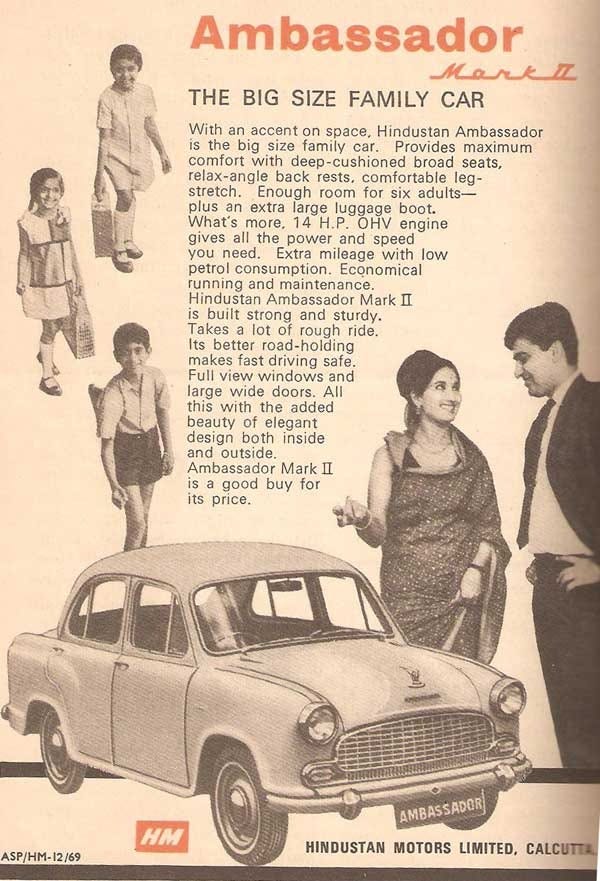
From the late 1950s until the early 1980s, Indians had barely any choice when it came to cars. The Hindustan Ambassador had effectively become the default everywhere, from government offices and taxi stands to weddings and family road trips.
Then came the Maruti 800.
When it was launched in 1983, it looked completely different from the big, rounded cars Indians were used to. It was small, light, fuel-efficient, reliable and much easier to drive. At around ₹47,000, it was also roughly 37% cheaper than the Ambassador and Premier Padmini, which were priced at around ₹75,000 at the time.Fast forward to today, the market looks completely different.
Indian roads are now filled with Cretas, Nexons, Brezzas, Scorpios, Fortuners and many other models. Buyers now talk about automatic cars, sunroofs, connected features, hybrids and EVs.
None of this happened overnight.
It took decades of government policy, foreign partnerships, new technology and Indian engineering to build the industry we see today.
1897-1947: Before India Had an Auto Industry
India saw its first cars long before it had an automobile industry.
The first recorded car arrived in Calcutta in 1897. A year later, Bombay had four cars, including one owned by industrialist Jamsetji Tata. It was a luxury that only royalty, wealthy businessmen and a handful of elites could afford.
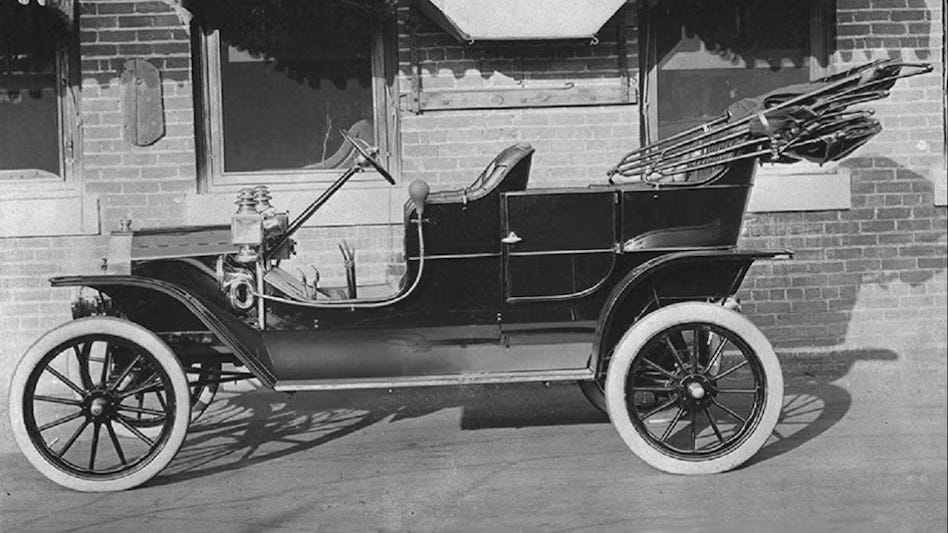
Over the next two decades, cars slowly became more visible.
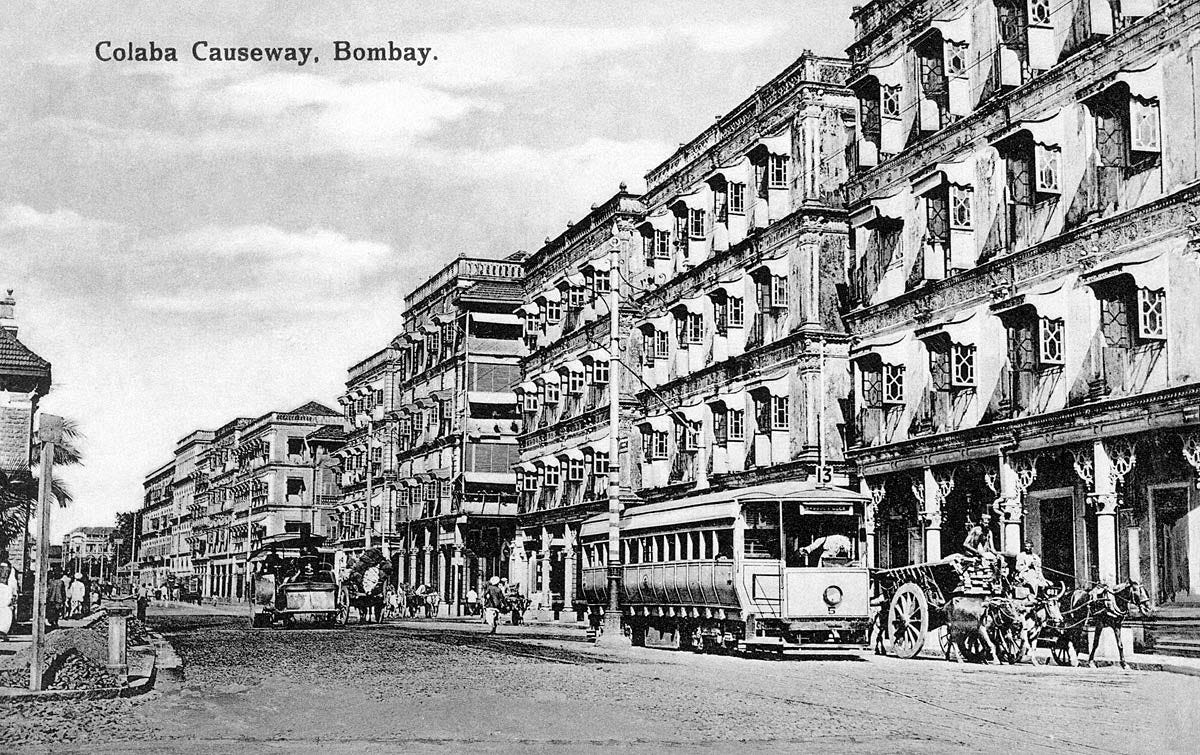
They were still rare. In cities like Bombay, trams, horse carriages and handcarts were far more common. But every now and then, a motor car passed by and attracted attention. By 1920, India had nearly 13,500 imported vehicles, and global companies like Ford and General Motors had started taking the Indian market seriously.
Almost every important part of the vehicle was imported. Even when General Motors started assembling cars and trucks in Bombay in 1928, and Ford followed with assembly operations from 1930, the model was simple: bring parts into India and assemble them here.
Actually making those parts was much harder.
India did not yet have companies producing engines, gearboxes or electrical systems at scale. The huge network of suppliers that surrounds the automobile industry today simply did not exist.
But the groundwork had started. Local firms began making vehicle bodies, Dunlop started producing tyres in India in 1936, and workshops developed the skills needed to repair and maintain automobiles.
Then, just before independence, Indian businesses began thinking bigger. Hindustan Motors was established in 1942 and Premier Automobiles in 1944, with the ambition of eventually manufacturing complete vehicles locally.
From here, the story of Indian cars really began.
1947- Early 1980s: Building an Indian Car Industry Under the Licence Raj
After independence, India wanted to build its own industries instead of depending heavily on imports. The country had limited foreign exchange, so continuing to spend scarce dollars and pounds on imported cars and components was difficult to sustain.
That gave the government a strong reason to push local manufacturing. If cars were going to be sold in India, it wanted more of them, and more of their parts, to be made here.
In 1948, the central government brought automobiles under its regulation. A year later, vehicle imports were largely restricted to completely knocked-down kits that could be assembled in India.
The push became much stronger in 1952, when the government appointed the Tariff Commission to study how India could build its own automobile industry. Its 1953 recommendations were clear: companies could not simply keep importing kits and assembling them forever. They needed a proper plan to manufacture vehicles and components locally.
For global companies, India was still a very small market, so investing heavily in local manufacturing did not always make economic sense. Ford and General Motors left India in 1954 rather than make the investments required under the new system.
This created an opportunity for Indian manufacturers.
By the end of 1955, only six approved vehicle manufacturers remained, including Hindustan Motors, Premier Automobiles, Mahindra & Mahindra and Tata’s TELCO. Indian companies and their suppliers now had to learn how to manufacture more parts locally rather than simply import them. Slowly, India began building the engineering skills, factories and component suppliers needed for a domestic automobile industry.
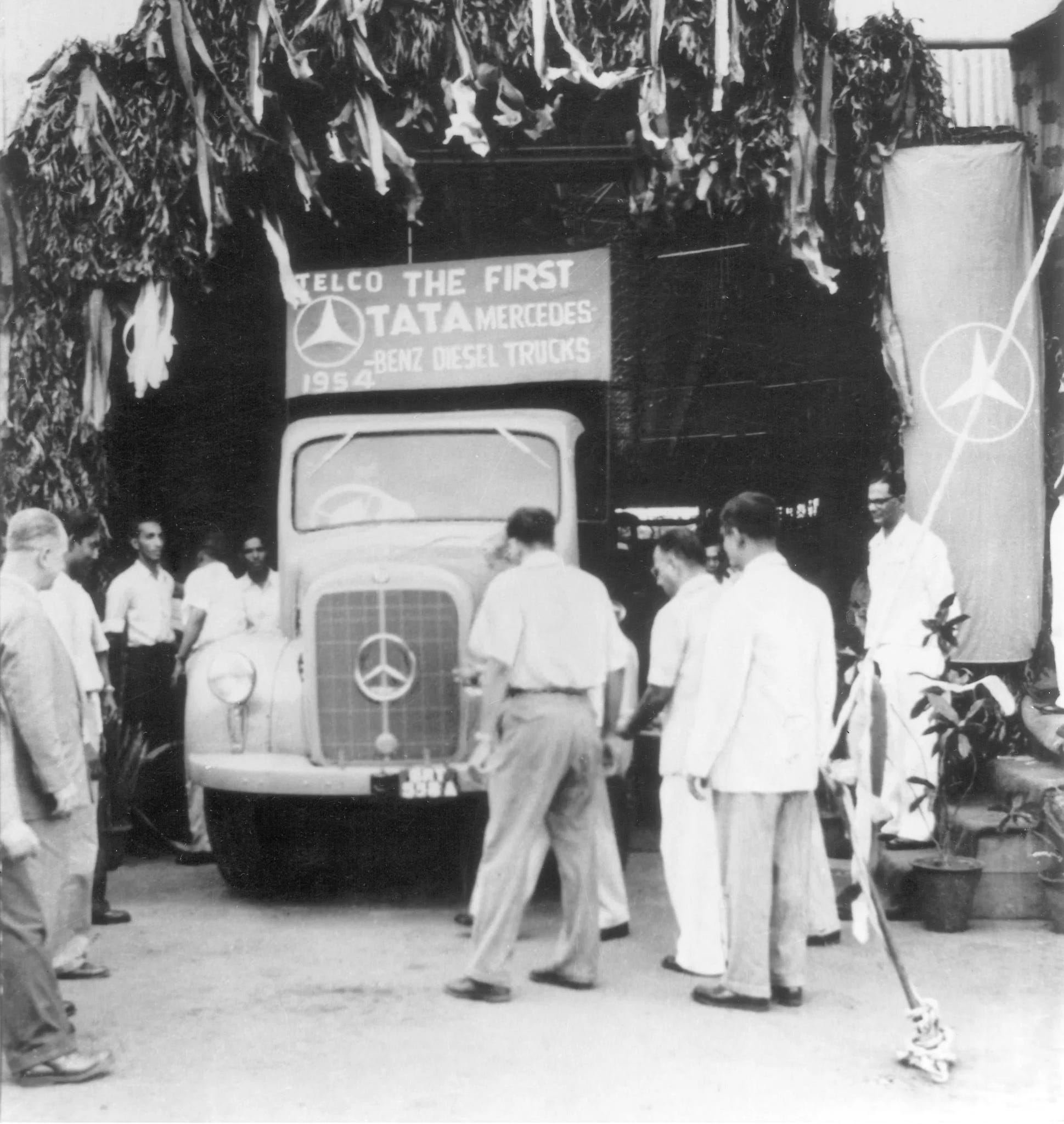
This is also when two cars came to define Indian roads.
The Hindustan Ambassador arrived in 1957, based on the British Morris Oxford. It was large, spacious and well suited to rough Indian roads. Ministers travelled in it, government departments used it, families took it on long journeys and taxi drivers depended on it. For an entire generation, the Ambassador became almost the default image of an Indian car.
Premier offered the main alternative. Its Fiat 1100-based cars were smaller and easier to drive. The familiar Fiat 1100 Delight arrived in 1964, later became the Premier President and was renamed the Premier Padmini in 1974. In Bombay, it would eventually become closely associated with the city’s black-and-yellow kaali-peeli taxis.
But while India had succeeded in creating a local car industry, the system around it became increasingly restrictive.
Under the industrial licensing system, manufacturers needed government approval to add capacity, set up plants and expand production. Imports of cars, machinery and components were tightly controlled, while the government itself viewed passenger cars largely as a luxury product, not an industrial priority.
The result was a market where demand kept growing, but supply did not keep up.
By the mid-1970s, annual demand for cars was estimated at around 80,000 units, Estimates of total annual car production during the 1970s range from roughly 33,000 to 47,000 units.
For buyers, this meant waiting.
Getting a car could take more than a year, and just before Maruti entered the market, the Premier Padmini had a waiting period of around 8-10 years.
Imagine booking a car today and being told that delivery might come sometime in the next decade.
This also explains why products changed so slowly. When almost everything a manufacturer produced already had a buyer, there was little pressure to launch a better model every few years. The Ambassador and Fiat-based Premier cars remained on Indian roads for decades with only gradual improvements.
So the Licence Raj had two very different effects.
It helped India build a domestic automobile and component industry when almost none existed. But by protecting that industry from competition for too long, it also reduced the pressure to innovate.
That was about to change with a very small car called the Maruti 800.
1981-1991: The Maruti-Suzuki Revolution
By the early 1980s, Indian car buyers had become used to a very different kind of market. Cars were expensive, waiting periods were long, and the Ambassador and Padmini were still based on designs that had changed very little over the years.
Then came a small, boxy car that looked nothing like them.
The government set up Maruti Udyog in 1981, and a year later, Japan’s Suzuki Motor Corporation became its technology and equity partner with an initial 26% stake. This was a major shift. After decades of protecting the domestic car industry, the government was now bringing in a foreign company specifically to help build a modern small car in India.
Even before people had seen the car on the road, the excitement was huge. Bookings opened on 9 April 1983, and reported orders crossed 1.35 lakh within about two months. Maruti’s original plan was to produce only around 20,000 cars in the first year.
Then came 14 December 1983.
Prime Minister Indira Gandhi handed over the keys of the first Maruti 800 to Indian Airlines employee Harpal Singh, who had been selected through the allotment process. He paid around ₹47,500 for the car
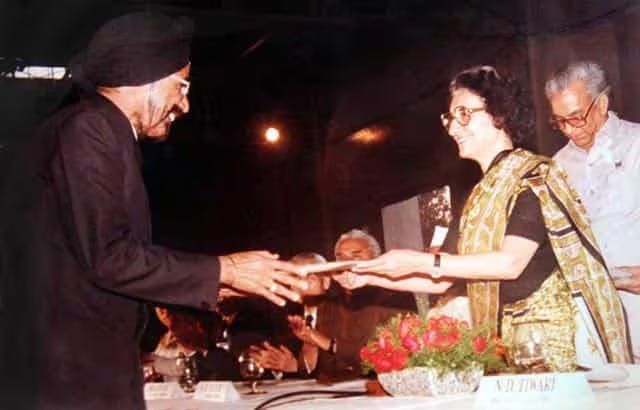
For buyers used to the Ambassador and Padmini, the little 800 felt like a car from another generation.
It was small and light, but that was part of its charm. It had front-wheel drive, front disc brakes, floor-mounted gears, bucket seats and a moulded dashboard. It was easier to handle, more fuel-efficient and much more modern than what most Indian buyers had experienced before. Even details that sound ordinary today, like a smooth gearshift or effective wipers, stood out then.
The change was not limited to the car itself. Suzuki also brought a different way of manufacturing.
One story from Maruti’s early days captures this well. When production was about to begin at the Gurgaon plant in 1983, Suzuki engineers were reportedly unhappy with the shop floor’s cleanliness. A Japanese executive picked up a bucket and mop himself, and Maruti employees joined him. It was a small incident, but it showed a new mindset: quality wasn’t something checked only at the end. It had to be built into every stage of production.
Interestingly, the first Maruti 800s were not very Indian. Around 97% of the content was initially imported, with mainly tyres and batteries sourced locally. But this changed quickly as Maruti pushed suppliers to make more parts locally and meet Suzuki’s quality standards.
That process helped create a new generation of auto-component companies. Motherson supplied wiring components to the very first Maruti 800s, while groups such as Sona, JBM and others grew alongside Maruti and learned Japanese production methods and quality standards. By the time global carmakers entered India in the 1990s, they found a much stronger supplier base already in place.
So the Maruti 800 did much more than give India a new car.
It changed buyer expectations, how cars were made, and helped build the supplier base that would support the next wave of global carmakers entering India in the 1990s.
1991-2000: Liberalisation Brings the World to India
By the early 1990s, Maruti had already changed what Indians expected from a car. But the market itself was still quite closed. Most global carmakers could not simply enter India, set up a plant and start selling.
That started changing after the 1991 economic reforms.
The government began removing industrial licensing, first for commercial vehicles and auto components, and then for passenger cars in 1993. Foreign companies were also allowed to own up to 51% in many industries through the automatic route. Suddenly, India was no longer a market global carmakers had to watch from the outside. They could now come in, invest and compete.
And for Indian buyers, the change was visible very quickly.
Showrooms once dominated by Maruti, Ambassador, and Premier started filling with unfamiliar names and very different-looking cars. Mercedes-Benz returned through Tata. Ford entered with Mahindra. Honda came with Siel. Toyota partnered with Kirloskar. General Motors tied up with Hindustan Motors. Daewoo, Peugeot, Mitsubishi and Fiat also joined the rush.
| Carmaker | India entry / JV | First major product | Why it mattered |
| Mercedes-Benz | 1994 JV with TELCO | E-Class, 1995 | Brought modern luxury cars back to India |
| Peugeot | 1994 JV with Premier | Peugeot 309, 1995 | One of the first European entrants after reforms |
| General Motors | 1994 JV with Hindustan Motors | Opel Astra, 1996 | GM returned to India after leaving in 1954 |
| Daewoo | 1995 through DCM-Daewoo | Cielo, 1995 | Brought modern Korean cars and aggressive pricing |
| Ford | 1995 JV with Mahindra | Escort, 1996 | Major American manufacturer enters passenger cars |
| Honda | 1995 JV with Siel | City, 1998 | Helped create India's aspirational midsize sedan market |
| Hyundai | 1996, own Indian subsidiary | Santro, 1998 | Became Maruti's strongest mass-market challenger |
| Mitsubishi | With Hindustan Motors | Lancer, 1998 | Added another modern Japanese sedan to the market |
| Toyota | 1997 JV with Kirloskar | Qualis, 2000 | Built a long-term manufacturing base in India |
But India did not simply open the gates and allow companies to import everything.
Later in the decade, the government pushed new passenger-car companies to increase local content to around 50% within three years and 70% within five years. They were also expected to balance a large part of their imports through exports.
So the message was simple: India was open, but companies had to build here, source here and stay for the long term.
Among all these companies, Hyundai’s story stands out.
When Hyundai Motor India was set up in 1996, hardly anyone in India knew the Korean brand. Maruti had already spent more than a decade building trust, dealerships and service centres across the country. Competing with it looked extremely difficult.
Hyundai started with something much simpler: give the Indian middle-class family a small car that felt modern, offered more space and was still affordable.
That car was the Santro, launched in September 1998.
The Santro’s tall design gave it more headroom and cabin space without making the car much bigger from the outside. It was also easy to drive, fuel-efficient and came with features that made it feel more modern than many cars available at the time.
Hyundai also moved quickly on the business side. It built the Santro locally at its new Chennai plant, developed Indian suppliers, and rapidly expanded its dealer and service network.
Then came the marketing.
For many Indians, their first introduction to Hyundai was not through a showroom but through television. Shah Rukh Khan became the face of Santro, appearing in ads that made an unfamiliar Korean brand feel friendly and familiar. In an era when television advertising could quickly become part of popular culture, this gave Hyundai a huge advantage.
By March 1999, barely six months after the Santro’s launch, Hyundai had become India’s second-largest car manufacturer, behind Maruti.
Other foreign companies found their own spaces too. Honda City, launched in 1998, became an aspirational upgrade for buyers who wanted something more premium than a small car. Toyota Qualis, launched in 2000, took a different route. It focused on space, durability and reliability and quickly became popular with families as well as commercial users.
Some companies failed too. Peugeot eventually left India, Daewoo collapsed, and several other foreign brands struggled to build enough scale. Peugeot struggled because of labour problems at its partner Premier’s plants, production delays, rising losses and disagreements between the two partners. Daewoo faced a different issue: its parent company in Korea ran into a severe debt crisis and was declared bankrupt in 2000, which eventually hurt its Indian operations, dealer support and spare-parts network.
India was now open to global carmakers, but simply bringing an international brand was not enough. Companies had to understand Indian families, keep prices competitive, manufacture locally, build a strong service network and launch products suited to Indian roads and usage.
For the first time, manufacturers had to compete seriously for the buyer. That slowly shifted power in the market from the carmaker to the customer.
1998-2002: India Learns to Design Its Own Cars
By the late 1990s, India had become much better at manufacturing cars. Maruti had built a strong supplier base, while companies like Hyundai, Honda, and Ford brought in newer technology and better manufacturing systems.
But one important gap still remained.
Most cars sold in India were still based on designs developed outside India.
The Maruti 800 was based on Suzuki’s small-car platform from Japan. Hyundai’s Santro was developed from the Korean Hyundai Atos platform. Honda’s first City sold in India was based on Honda’s Asian-market sedan programme and the Civic platform, while Ford’s Escort was essentially a European car adapted for Indian roads with changes to ground clearance, suspension, air-conditioning and fuel efficiency.
That started changing with the Tata Indica.
Tata had spent decades making trucks and commercial vehicles. When Ratan Tata unveiled the Indica in 1998, it was one of the first serious attempts by an Indian company to develop a modern passenger car around Indian needs.
Around 98% of the Indica’s 3,885 components were made in India, with support from more than 300 suppliers. When bookings opened, Tata received around 1.15 lakh fully paid bookings in just eight days.
A few years later, Mahindra took another big step with the Scorpio.
Until then, Mahindra was known mainly for Jeeps and rugged utility vehicles based on older designs. In 1997, it began working on a completely new SUV, a taller, more rugged vehicle with higher ground clearance and more road presence than a normal hatchback or sedan. Five years later, Mahindra launched the Scorpio in 2002.
The project’s scale was remarkable. Around 120 Mahindra engineers, with an average age of just 27, worked on it. The entire programme cost around ₹550 crore, which Mahindra says was close to three years of its profits at the time.
What changed with Indica and Scorpio was important:
-
Indian companies were no longer limited to assembling or modifying foreign cars.
-
They were learning to manage an entire vehicle-development programme themselves.
-
Indian suppliers were being involved much earlier in design and engineering.
-
Companies were starting to build products specifically around Indian roads, families and price points.
The Scorpio’s success gave Mahindra the confidence to invest much more seriously in research and product development. The company later built the Mahindra Research Valley and went on to develop vehicles such as the XUV500, Thar, XUV700 and today’s electric SUVs.
2001-2010: India Becomes a Small-Car Manufacturing Hub
By the early 2000s, something had changed in India’s car industry.
For decades, the question had been whether India could make enough cars for Indians. Now global companies were asking a different question: could India become a low-cost base to make cars for the rest of the world?
The policy environment was helping. In 2000, India allowed 100% foreign investment in the automobile sector through the automatic route, making it much easier for global carmakers to invest in factories, suppliers and technology here. A few years later, the Automotive Mission Plan 2006-16 formally set out the ambition of making India a preferred global destination for automobile and component manufacturing.
Then came a tax rule that shaped Indian cars for years.
In the 2006 Union Budget, excise duty on small cars was cut from 24% to 16%. But to qualify as a small car, the vehicle had to be no longer than 4 metres, with an engine of up to 1,200cc for petrol or 1,500cc for diesel. The government’s stated aim was to encourage India to become a hub for small, fuel-efficient cars.
The 4-metre limit was basically a tax boundary. A car just below it attracted lower duty, helping the manufacturer price it more aggressively. Naturally, companies began designing cars around that number.
Manufacturers started designing cars specifically around it. Over time, it encouraged the growth of compact hatchbacks, compact sedans and later even sub-4-metre SUVs.
Hyundai began its export journey in 1999, sending just 20 Santros to Nepal. By 2003, it was shipping Santros to Europe and had become Hyundai’s global small-car export hub. In 2004, Hyundai crossed 1 lakh cumulative exports and became India’s largest automobile exporter.
Maruti followed the same direction. By 2007, it was planning a new small car largely for Europe, with Maruti planning to export 1 lakh units a year and another 50,000 for Nissan.
The supplier industry grew alongside it. Higher volumes meant component makers could invest in better technology, produce parts at lower cost and meet global quality standards.
The change was visible in the numbers too. India exported only around 27,000 passenger vehicles in FY01. By FY18, that number had risen to more than 6.7 lakh.
2012-2026: The SUV Revolution
For many years, the typical Indian family car was a hatchback or a sedan.
A hatchback is a compact car like the Maruti Alto, Swift or Hyundai i10, where the boot opens together with the rear glass. A sedan, like the Honda City, has a separate boot at the back and usually offers a little more space and a more premium feel.
SUVs were different. They were taller, had more ground clearance and gave the driver a better view of the road. Cars like the Tata Safari and Mahindra Scorpio had these qualities, but they were also large, expensive and not always convenient for daily city use.
Indian roads created a natural need for this kind of vehicle.
Many buyers wanted a car that could handle bad roads, potholes, speed breakers and uneven surfaces without scraping the bottom. Families also liked the higher seating position, extra space and stronger road presence. The problem was that traditional SUVs were simply too big and expensive for most city buyers.
That started changing in 2012 with the Renault Duster.
The Duster gave buyers the SUV feel without making the car too large or difficult to use every day. It offered higher seating, more ground clearance and stronger road presence, but could still be driven comfortably in the city.
Then Ford pushed the idea even further with the EcoSport in 2013.
It was smaller, came under the 4-metre tax limit, and launched at around ₹5.59 lakh. Suddenly, a buyer looking at a premium hatchback or compact sedan could also consider an SUV-style vehicle without spending much more.
The next big moment came with the Hyundai Creta in 2015. The Creta showed that an SUV could be comfortable, refined and feature-rich enough to become the main family car. It did not feel like a rugged utility vehicle. It felt like a normal car, just taller and more aspirational.
Then Maruti entered with the Vitara Brezza in 2016. It combined SUV styling with what Indian buyers already trusted: Maruti's pricing, mileage, service network, and resale value. The response was immediate. Brezza received around 20,000 bookings within its first two weeks and crossed 1 lakh sales within a year.
From there, almost every major carmaker wanted an SUV in its portfolio.
| Model | Launch | What it changed for buyers |
| Renault Duster | 2012 | Made the modern SUV practical for normal family use |
| Ford EcoSport | 2013 | Made SUV styling more affordable through the sub-4m format |
| Hyundai Creta | 2015 | Turned the midsize SUV into a mainstream family car |
| Maruti Vitara Brezza | 2016 | Combined SUV appeal with Maruti's price, mileage and service network |
| Tata Nexon | 2017 | Added design, value and a strong safety image |
| Kia Seltos | 2019 | Raised expectations for features, interiors and technology |
The interesting part is that most buyers were not buying these cars to go off-road.
They wanted higher seating, more ground clearance, more space, better visibility and stronger road presence. These qualities suited Indian roads and also made the car feel more aspirational.
The numbers show how completely the market changed. Utility vehicles made up only around 21% of passenger-vehicle sales in FY16. By FY26, their share had risen to almost 67%.
In just a decade, the SUV went from a relatively niche vehicle to the default family car for much of India.
EVs and the Next Transition
For more than a century, the basic idea of a car remained the same: burn petrol or diesel inside an engine and use that power to move the wheels.
Electric vehicles change that completely.
For India, the shift also made strategic sense. The country depends heavily on imported crude oil, while rising vehicle ownership increases fuel consumption and urban pollution. EVs offered a way to reduce fuel dependence over time while also moving transport towards cleaner energy.
An EV removes many traditional parts, such as the engine, fuel system, and gearbox, and replaces them with a battery, electric motor, and power electronics.
That also created a new challenge. India had spent decades building a strong ecosystem around engines, transmissions and mechanical components. EVs shifted a large part of the value towards batteries, electronics and software, areas where India was still heavily dependent on imports.
Government policy started responding to this shift in 2015 with FAME, or Faster Adoption and Manufacturing of Hybrid and Electric Vehicles in India. The scheme offered incentives to make EVs more affordable while also supporting charging stations, electric buses, testing facilities and related technology.
FAME-I was followed by FAME-II in 2019, with an initial outlay of ₹10,000 crore, later increased to ₹11,500 crore. The scheme supported around 16.7 lakh EVs before ending in March 2024.
It has since been replaced by PM E-DRIVE, which continues to support EV adoption, charging infrastructure, and domestic manufacturing. The scheme is currently scheduled to run until March 2028.
Passenger EVs were also becoming more practical. Tata Motors launched the Nexon EV in 2020 at ₹13.99 lakh, bringing electric cars closer to mainstream buyers. Mahindra later moved to dedicated EV platforms with products such as the BE 6 and XEV 9e.
Currently, EVs remain a relatively small part of the passenger-car market. In FY26, electric passenger-vehicle registrations were around 1.98 lakh units, giving EVs roughly 4.3% market share.
The bigger challenge now lies in localisation. India’s EV supply chain is estimated to be only around 30-40% localised, meaning much of the value still depends on imported technology and components. Battery cells remain the biggest gap and account for roughly 35-40% of an EV’s cost.
India’s Four-Wheeler Industry Today
The scale of the change is clear when we look at where the industry stands today.
In the 1970s, India was selling only around 32,000 passenger vehicles a year. In FY26, domestic passenger-vehicle sales reached a record 46.43 lakh units, up 7.9% YoY. Another 9.05 lakh vehicles were exported, also a record high. India is now the world’s third-largest passenger-vehicle market.
What Indians buy has changed just as much. In FY16, utility vehicles such as SUVs and crossovers made up only around 21% of passenger-vehicle sales. By FY26, their share had risen to almost 67%. Utility-vehicle sales crossed 31 lakh units, while traditional passenger cars such as hatchbacks and sedans sold around 13.79 lakh units.
The market is also far more competitive. Maruti Suzuki remains the largest player, but Mahindra, Hyundai, Tata, Toyota, Kia and others now compete across different price points. Buyers can choose between petrol, diesel, CNG, hybrids and EVs, along with manual and automatic gearboxes and several body styles.
Carmakers, though, are only the visible part of the industry.
Behind every car sits a much larger network of companies that make engines, brakes, wiring harnesses, seats, tyres, electronics, castings, and thousands of other parts. As vehicle production grew, so did these suppliers.
In FY26, India’s auto-component industry posted a turnover of about ₹7.6 lakh crore, up 12.7% YoY. Supplies to vehicle manufacturers alone came to around ₹6.63 lakh crore, while component exports touched roughly ₹2.12 lakh crore, or $24 billion.
And now, the challenge is changing again.
In the 1950s, localisation meant learning how to make engines, gearboxes, tyres and body panels in India. Today, as cars become more electronic and software-driven, localisation increasingly means making battery cells, electric motors, power electronics, semiconductors and advanced vehicle systems here.
The next big challenge now is how much of the technology inside the next generation of cars India can develop and own itself.
Disclaimer
Investment in securities market are subject to market risks. Read all the related documents carefully before investing. The information and analysis provided herein are for educational and informational purposes only and do not constitute investment advice, a research recommendation, or an offer, solicitation, or recommendation to buy, sell, or hold any security. Investors should exercise their own judgment, conduct independent due diligence, and consult professional advisers before making investment decisions. Finology Ventures Private Limited, its affiliates, directors, employees, and research analysts shall not be liable for any loss or damage arising from the use of or reliance on this information.